
A home charger that can choose when to charge.
A home EV charger is a dedicated unit, fixed to a wall or post, that charges an electric vehicle more safely and usually faster than an ordinary socket.
A smart charger can follow a schedule and respond to signals, such as prices that change through the day or requests from the grid. You decide when the car must be ready, and the charger works around that. See the glossary for the main terms.
A car can use a lot of electricity compared with other household equipment. If many cars charge at the same busy hour, local networks feel it. Spreading charging across the night helps.
Ready on time, charged at the right time.
Charging can move without leaving you short. The driver sets the limits, and the charger works within them.
Set a ready-by time.
You choose when the car must be charged and how much charge it needs. Everything else can happen around that.
Start later.
Instead of charging as soon as you plug in, the charger waits for a quieter or lower-priced period, often overnight.
Slow down or pause.
At busy moments the charger can reduce its power or pause briefly, then catch up once demand eases.
Use plentiful energy.
When there is spare solar power, at home or on the grid, the charger can speed up to make use of it.
What smart charging means for homes and organisations.
Smart charging looks different at a single driveway and at a shared car park.
For a household.
Plug in when you get home and let the charger choose the hours, keeping the car ready for the morning.
Olmack for homesFor housing providers.
Shared parking with several chargers needs care, so that many cars charging at once stay within the site's electrical limits.
Olmack for housing providersFor schools.
Staff and visitor charging can be timed around the school's own energy use during the day.
Olmack for schools
How EV charging can fit with the Olmack system.
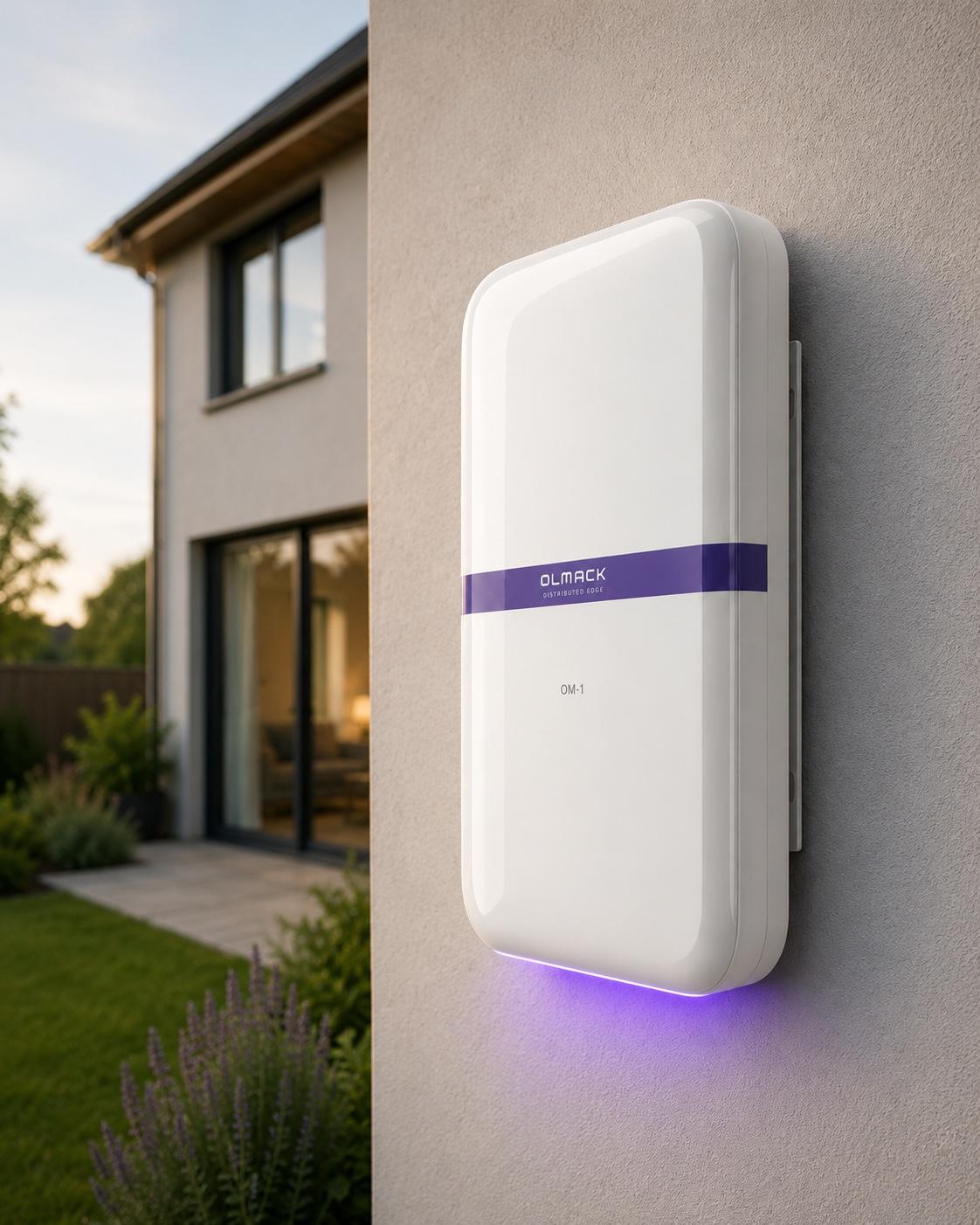
Olmack brings compatible energy equipment, monitoring and communications into one managed platform. The OM-1 unit is the on-site part of that system, mounted on the outside wall of the home.
Olmack is designed to work alongside compatible equipment; ask us whether yours is supported. Chargers differ in how they communicate, so tell us the make and model you have or plan to install.
Read how the Olmack platform brings equipment and monitoring together, and how charging can sit alongside solar panels.
What to check before fitting a home charger.
Use a qualified installer.
A charger needs its own circuit and safety protection, fitted by an electrician qualified for EV chargers where you live.
Check your electrical supply.
Your installer will check whether your home's supply can handle a charger alongside everything else you use.
Local rules vary.
Some countries set rules for how home chargers must behave, or require the grid operator to be told about them.
Explore countriesKeep it secure.
A connected charger should receive security updates. Ask how your charger is kept up to date and protected.